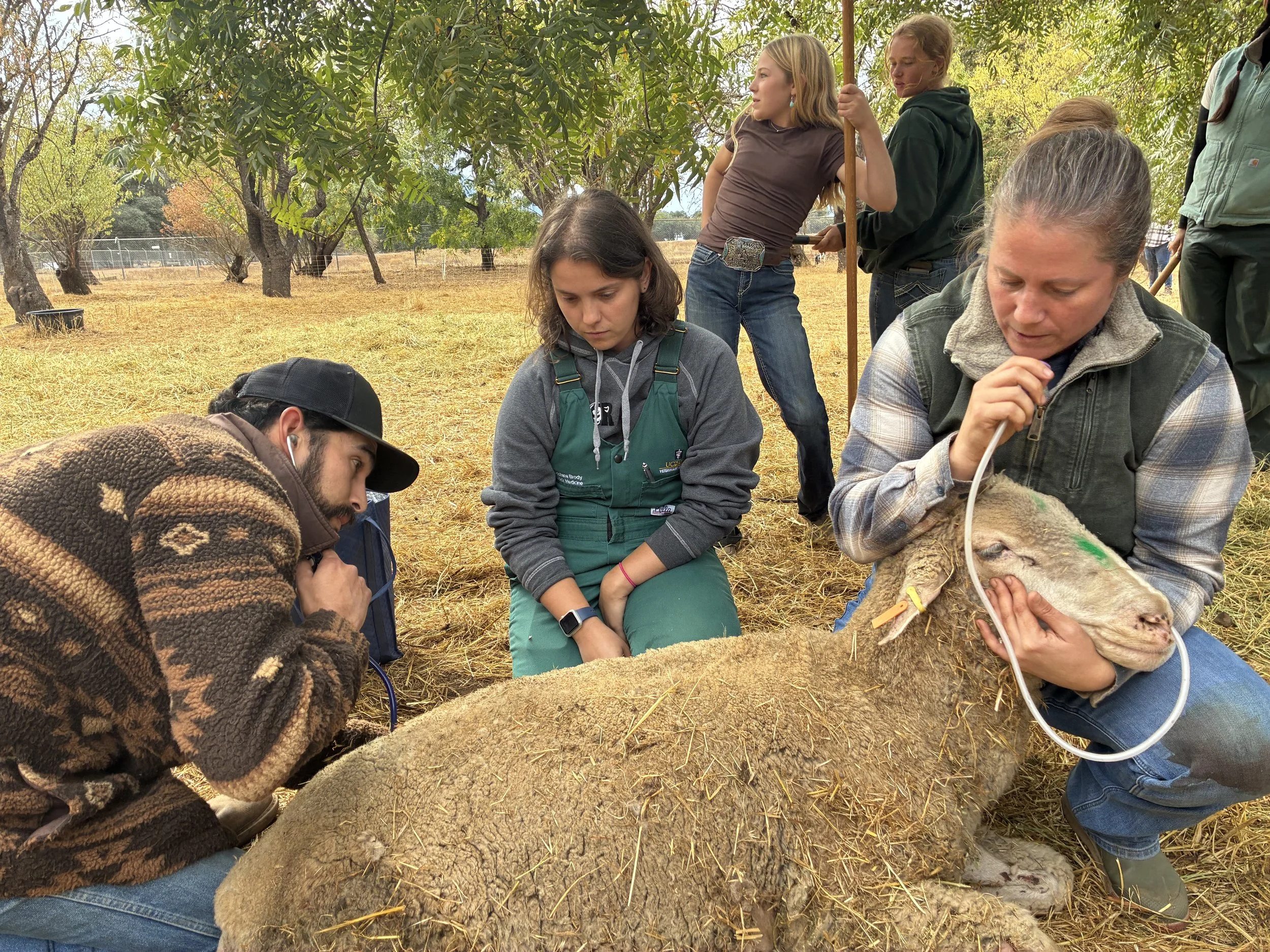
Our hands-on live lambing school prepares you for successful lambing and kidding. This class is held once each year in the fall (September or October). You will learn to identify problems in the field, safely assist ewes and lambs during and after delivery, and avoid common issues and mistakes. This is not a cozy-cuddle lambs class. This is real labor, delivery, injections, c-section, and field necropsy.
This class is for you if you unknowingly bought sheep that turned out to be pregnant, and had a scary or traumatic experience that has scared you away from lambing. Maybe you would like to grow your flock but feel unprepared and inexperienced. This class is a supportive, non-judgmental environment in which we all learn together and from each other – but especially from Dr. Rosie Busch.
Before Lambing:
How to prepare for lambing, and optimize for lamb and ewe health and longevity
How to make breeding plans
Herd health as it relates to breeding, including conditions that contribute to reduced fertility and abortion like B. ovis (Brucellosis), Vibrio (Campylobacter fetus), and Chalmydia (Chlamydiosis)
How to identify and deal with Sore Mouth (also known as Orf and contagious ecthyma), Ovine Progressive Pneumonia (OPP) and ovine lentivirus, Mastitis, Caseous Lymphadenitis (CL), Johnes ("YO-knees" disease), and Query or Queensland Fever (Q Fever).
How to optimize for different lambing environments and contexts
How to identify and address, hands on, pre-lambing issues including vaginal prolapse, Ketosis, calcium deficiency, and Bloat in ewes
How to tube a ewe safely and correctly
How to catch sheep and check udders for conformation and scoring; mastitis; and other conditions
How to examine colostrum quality and ewe milk production using the Brix refractometer and California Mastitis Test (CMT)
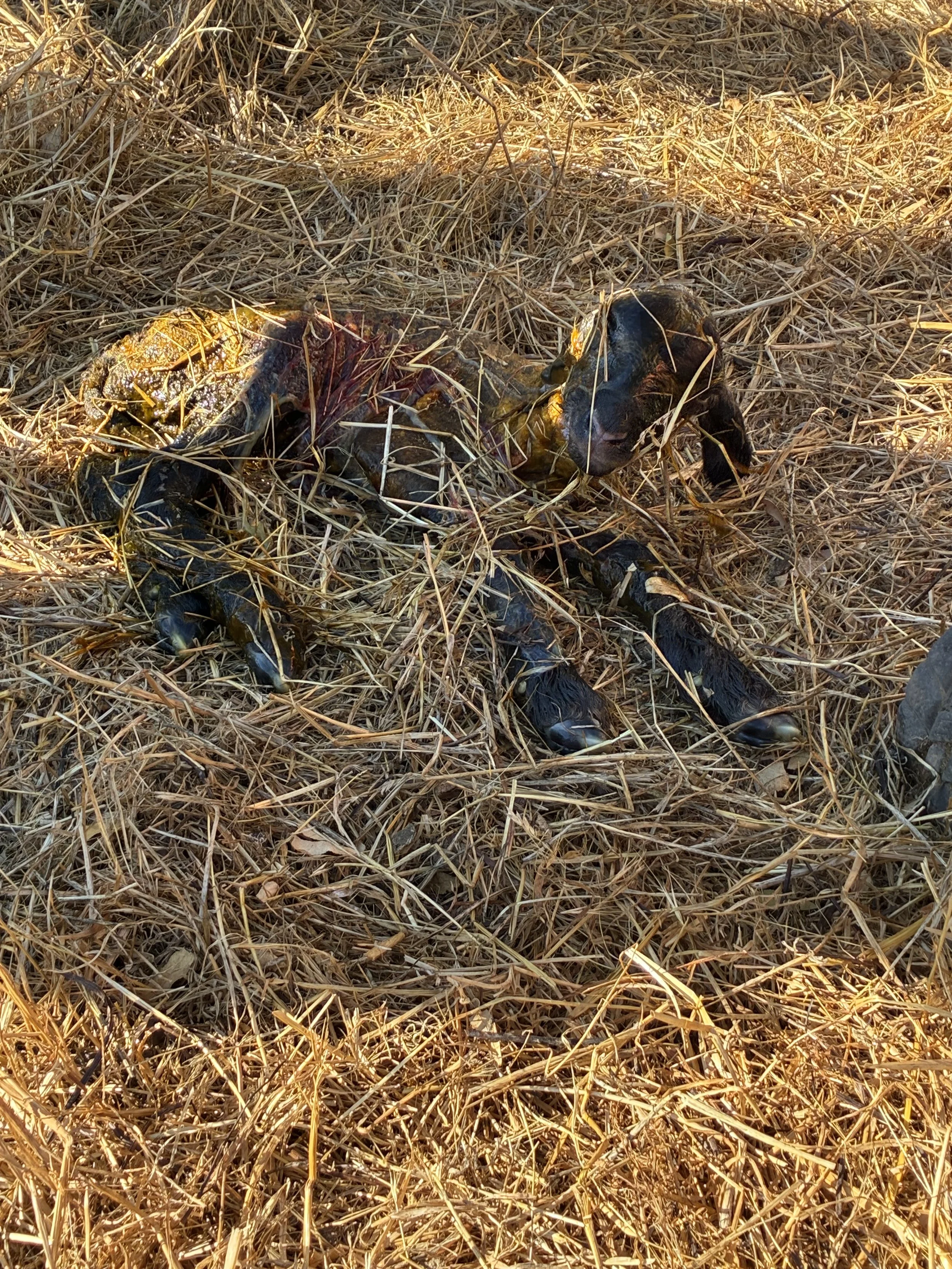
During Lambing:
How to recognize what normal lambing looks like
How to identify lamb-ewe bonding issues (like stealing lambs) and address them humanely
When to intervene in lamb delivery and how to assist a ewe without causing injury, including:
Correctly pulling lambs, and proper use of tools for dystocia;
Addressing uterine prolapse without injury;
Administering a terminal c-section and assisting live lambs immediately afterward, including lamb CPR
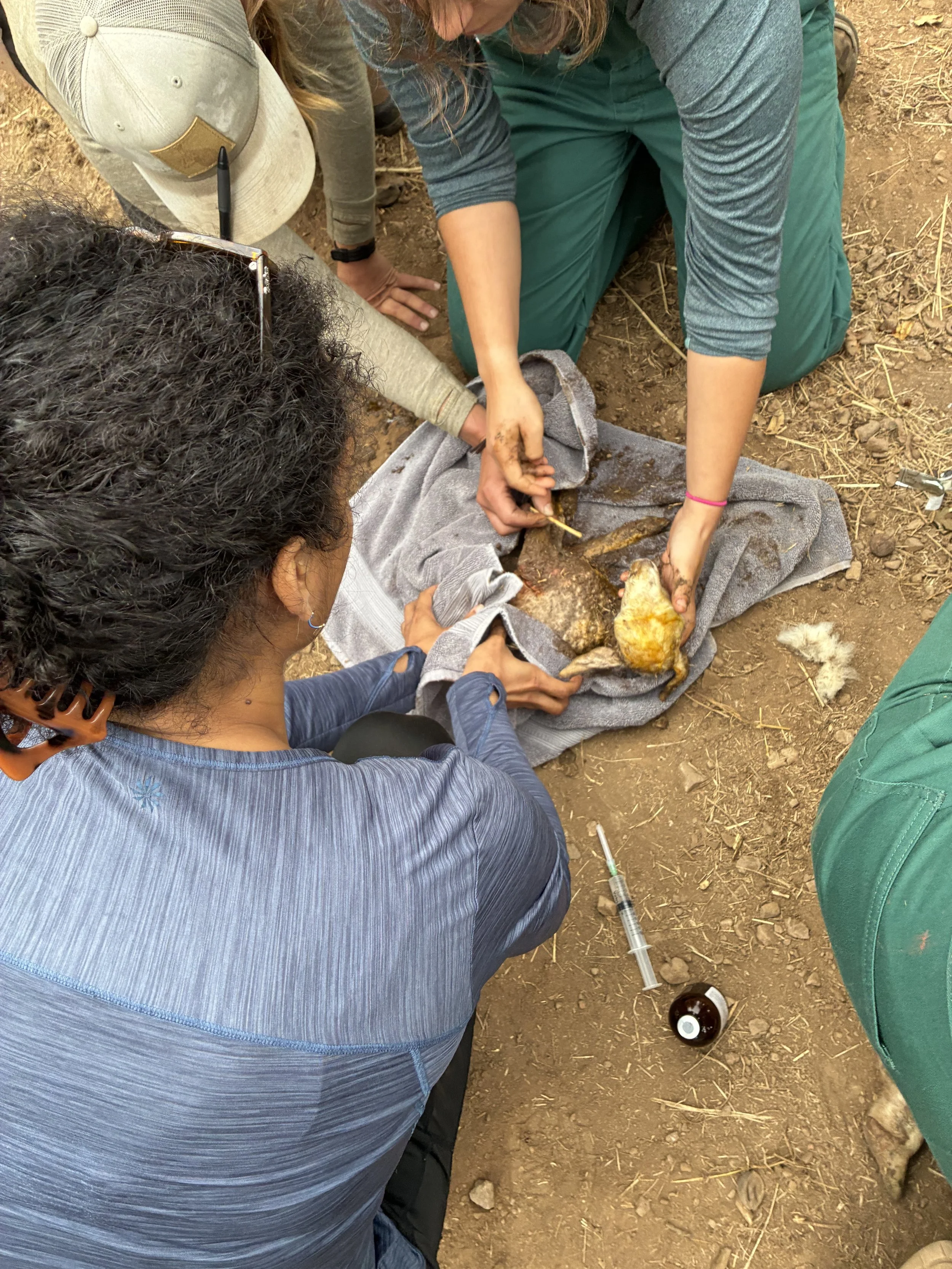
After Lambing:
How to process newborn lambs, including:
Proper handling of the umbilical cord and stump
Tail docking, tags, and neutering rams
Examination of eyelids/defects
How to triage weak lambs, including:
How to assist cold and starving lambs
Correct and safe tubing of lambs
Correct and safe intraperitoneal injections
How to treat selenium deficiency
Addressing scours, pinkeye, and infected joints
Leg fractures, and making and applying lamb-sized splints
Learning from hard experiences, including:
Hands-on field necropsy
How to identify what may or may not be responsible for a lamb’s death from organs and other internal signs
Class size is limited to approximately 20 people to ensure one-on-one interaction with the instructors and hands-on time in the field for each student. We announce classes to our newsletter list first, and then on social media, so be sure to sign up for our newsletter.